Posts

Showing posts with the label reversing

Reversing momentum: "dead time" or useful tactic?
Image
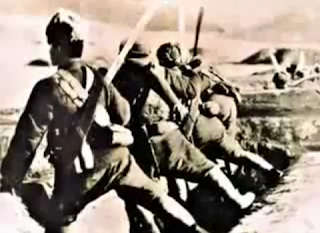
Introduction In my recent article " How the internal arts work: Part 1 " I discussed the issue of " dead time " - ie. time which is not productive or efficient in relation to achieving your desired outcome. Some of the comments made in relation to that article raised the issue of whether "reversal of momentum" is a subset of " dead time ". I believe that there are many instances where reversal of momentum is far from " dead time ". This is true of both unarmed and armed fighting. In fact, as I will detail in a forthcoming article, taijiquan makes extensive use of this tactic. However my recent immersion in the study of traditional Chinese swordplay, including the long military saber most recently known as the miao dao 苗刀 (used by the Chinese military in the Second Sino-Japanese War ), has provided at least one other concrete example of why it is sometimes necessary (and useful) to reverse your momentum. Reasons for reversing ...

Reversing kata movements in application

Image
There are one or 2 moves in goju kata where I “reverse” the direction of stepping/movement while performing bunkai (applications). I’ve often wondered whether — (1) the kata were deliberately designed that way “as a code” (something I think is a bit overstated nowadays); or (2) the kata were deliberately designed that way for an application I haven’t seen; or (3) the kata were deliberately designed that way for training or symbolic purposes (eg. stepping forward on the last move in gekisai dai ichi — said to reflect the “boldness” of the kata), not for any particular bunkai; or (4) the kata have been wrongly passed down in respect of a particular move. Consider the following move from sanseru kata at about 7:38 in the following video of Higaonna Morio sensei. In most kaiha it is performed as a leg catch with a step back — see the following video at about 0:48: (note however that I would personally prefer a leg catch on the other side, but the move is the same in principle). Over the y...